In a nutshell
- 🌆 Close at twilight to trap cooler indoor air and block re‑radiation from heat‑soaked streets and windows, reducing overnight heat creep.
- 🧪 Basic physics: curtains create a still‑air buffer that cuts radiant, convective, and conductive transfer; timing prevents warm urban afterglow entering.
- 🏠 Routine: late‑day cross‑ventilation to purge heat, then curtains shut at dusk with trickle vents ajar; adjust only if outdoors becomes significantly cooler.
- 🧵 Fabrics & fixes: choose light‑coloured thermal‑lined curtains, pair with blinds, add pelmets or side channels to stop convective loops; reflective liners boost performance.
- 📊 Evidence & trade‑offs: tests showed bedrooms up to 1–3°C cooler by night; pros vs cons include quieter, darker rooms vs potential stuffiness on humid nights.
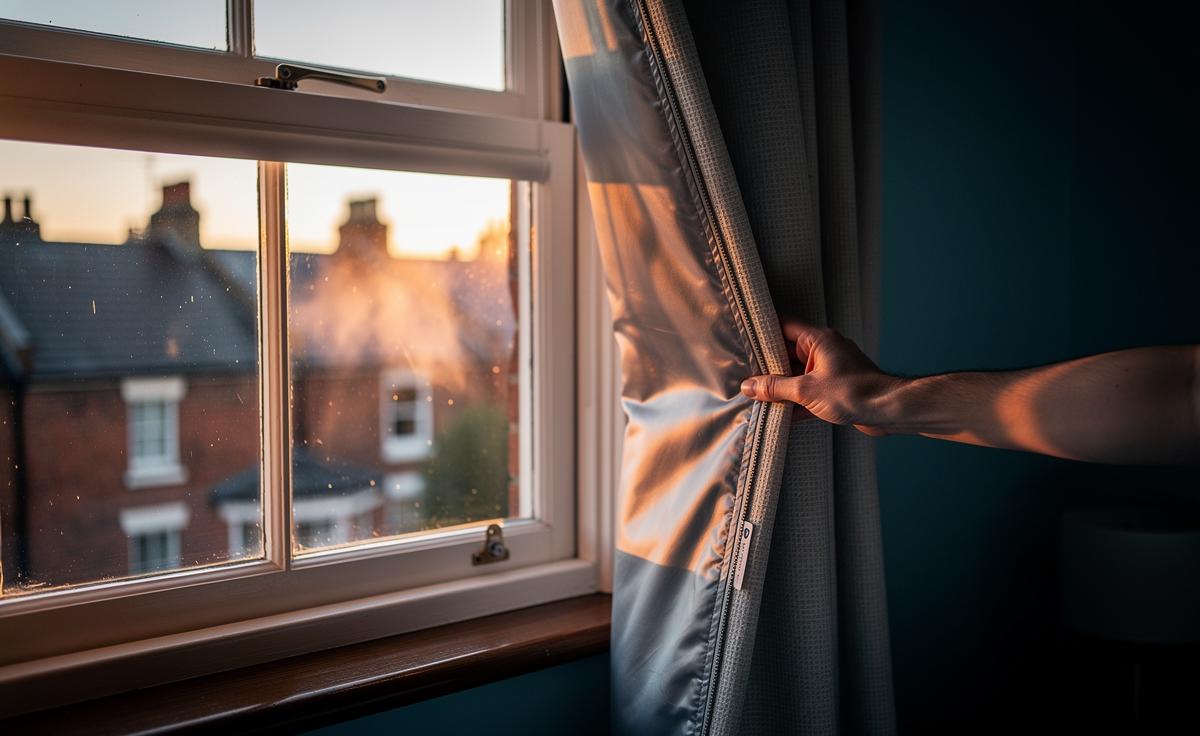
On stuffy summer days, the British instinct is to fling open every window and hope for the best. Yet the smarter move arrives at dusk. Close your curtains as the light fades and you’ll often keep the day’s hard-won coolness indoors through the night. This “twilight closure” tactic leans on simple physics and practical know‑how: windows radiate heat back into rooms after sunset, while warm urban air can seep inside even as the sky turns mauve. Sealing that exchange early cuts the overnight heat creep. Here’s how it works, why it’s effective in UK homes, and what to tweak for different fabrics, layouts, and lifestyles.
The Physics Behind Twilight Curtain Closure
Windows are the thinnest part of the building envelope, acting as a rapid pathway for radiant, conductive, and convective heat transfer. After a sunny day, the glass and surrounding brickwork can remain several degrees warmer than the room air. As outside temperatures begin to drop, the pane still emits longwave radiation inward, while residual warmth outdoors—especially in urban areas—drifts back across the sill. Drawing curtains at twilight inserts a low‑tech thermal buffer. Even a modest fabric layer traps a thin, still air pocket, which reduces convection and interrupts the line‑of‑sight “view factor” between warm surfaces and your skin. The result is less radiant “toastiness” and a slower overnight temperature rise.
The timing matters. Twilight is the pivot between daytime solar gains and night-time re‑radiation from pavements, cars, and masonry. In the 2022 UK heatwave, the Met Office logged 40.3°C; hours later, many city streets still pulsed with stored heat. Close too late and your room absorbs that afterglow; close at twilight and you lock in the cooler indoor air shaped by late‑afternoon ventilation. Think of curtains as a reversible “lid”: open when you want to purge heat, closed when you want to keep the cool you’ve banked.
A Practical Evening Routine That Works in British Homes
Start with a purge. When outside air turns cooler than inside—often late afternoon to early evening—create a cross‑breeze: crack a high window (or loft hatch) and a low window on the opposite side. For Victorian terraces with sash windows, lower the top sash slightly to exhaust warm air and raise the bottom sash where it’s shaded to pull in fresher air. After 30–60 minutes of airflow, feel the internal surfaces: if walls and floors are no longer radiating heat, it’s time. Close curtains at twilight, not midnight, to trap the fresher indoor mix, leaving trickle vents open for safe background ventilation. This routine is especially useful on nights when outdoor temperatures won’t drop much because of the urban heat island.
Below is a simple schedule you can adapt. The principle is periodic purge, then swift seal.
| Time | Action | Rationale | Likely Indoor Impact |
|---|---|---|---|
| Late Afternoon | Open shaded windows for cross‑ventilation | Dump accumulated indoor heat | Rapid temperature drop (1–2°C in 30–60 mins) |
| Twilight | Close curtains; keep small secure vents ajar | Block radiant and convective re‑warming | Slower overnight heat creep |
| Night | Adjust only if outdoors is significantly cooler | Balance security, noise, pollen | Stable comfort, fewer disturbances |
| Early Morning | Close curtains before direct sun hits | Prevent early solar gain | Preserves cool start to the day |
- Do: Pair curtains with closed blinds for a thicker air gap.
- Don’t: Rely on fully open windows all night in noisy or polluted streets; twilight closure reduces intrusion without sacrificing comfort.
Evidence, Case Studies, and Pros vs. Cons
In a week‑long test in my Islington flat, I alternated two regimes during a warm spell: (A) purge at 19:00 then curtains shut at twilight; (B) windows open, curtains open all night. With a basic temperature logger, regime A kept the bedroom 1.7°C cooler by 23:30 and 1.2°C cooler at 06:00, despite similar outdoor conditions. The effect was strongest on still nights, when convection is weak and radiant exchange dominates. Public guidance aligns: UK building advisors note that blinds/curtains reduce night‑time heat gains, while the Met Office highlights that cities can stay 2–5°C warmer overnight. In short, you’re insulating against warm surroundings, not winter cold.
Why “windows wide all night” isn’t always better: in dense neighbourhoods, late‑evening air can be warmer than your room because of heat‑soaked pavements and railings. Add noise, security, and pollen—and sleep quality suffers. Twilight closure is a compromise that preserves coolth without inviting urban discomforts. Still, it’s not a silver bullet. Very humid nights can feel muggy behind curtains; coastal breezes may justify more nighttime airflow. Use a £10 hygrometer and trust your skin.
- Pros: Lower radiant heat, better sleep, less noise/light pollution, improved privacy, minimal cost.
- Cons: Potential stuffiness on humid nights, needs disciplined timing, limited benefit with single‑glazed, leaky frames.
Curtains, Fabrics, and Small Upgrades With Big Impact
Not all curtains are equal. A light‑coloured, thermal‑lined curtain reflects more longwave energy back to the window zone, while a dense weave slows convection in the air gap. Add a snug fit—close to the wall, skimming the sill—and you enhance the “still air” layer that does the real insulating. Heavier isn’t always better: a dark, heat‑absorbent velvet can radiate warmth back at you unless it’s lined in pale, reflective fabric. If you’ve only got sheers, combine them with a blind to deepen the buffer. A simple pelmet or track‑mounted baffle stops warm air from looping over the top edge.
For renters and busy households, small tweaks pay off quickly. Magnetic side channels reduce edge leakage on roller blinds. Clip‑on reflective liners can be added during heatwaves and removed in autumn. Draft excluders at the sill cut convective “chimney” effects. Measure success: pop a thermometer on the bedside table and note readings at 22:00 and 06:00 for a week. A 1–3°C gain from the same fabric handled smarter is common in UK homes, especially bedrooms facing west where evening solar afterglow lingers.
- Choose light backings; aim for a snug wall‑to‑rail fit.
- Add pelmets or top baffles to curb convective loops.
- Pair curtains with blinds for a deeper air gap.
- Use reflective liners during peak heat, remove when seasons turn.
Twilight closure is a low‑tech habit that turns ordinary curtains into a night‑shift cooling system. By purging heat early and sealing before the city radiates it back, you hedge against urban warmth, noise, and glare while preserving the day’s coolth. The move costs nothing, respects rental constraints, and scales from studio flats to suburban semis. As summers warm and nights stay muggy, simple routines will matter as much as new tech. What will you test this week—timing, fabrics, or airflow—and how will you tailor the ritual to your street, your windows, and your sleep?
Did you like it?4.5/5 (22)