In a nutshell
- 🌥️ Prioritise orientation and sky exposure: taller window heads and cleaned-up sightlines raise the Daylight Factor, tapping diffuse overcast light without glare.
- 🎨 Use high-Light Reflectance Values (LRVs): matte ceilings (LRV 85–90) and warm off-white walls bounce light deeper; in tests, finish upgrades alone lifted illuminance by roughly a third.
- 🧰 Multiply light with smart details: splayed reveals, clerestory/transom panes, internal glazing, light shelves, and well-placed mirrors guide brightness beyond the window wall.
- 🪟 Why bigger windows aren’t always better: oversized glazing can add glare, heat loss, and privacy issues; choose strategic glazing—higher heads, selective coatings, and external shading—for brighter, more even rooms.
- 📏 Evidence-led tweaks work: case studies across the UK showed measurable gains (e.g., 25–35% perceived lift with slimmer mullions, 120→220 lux via borrowed light), proving distribution beats sheer glass area.
Some homes seem to glow even when the sky is pewter and the rain is horizontal. As a reporter wandering Britain’s terraced streets and coastal cul‑de‑sacs, I’ve found that the difference isn’t magic—it’s method. Brightness is engineered through orientation, reflectance, and smart detailing that squeezes every lumen from a grey day. The secret is not simply “more windows” but better ways to collect, distribute, and soften light. From light shelves in Victorian bays to limewashed brick in new-build kitchens, designers are learning to treat daylight as a material in its own right. Here’s what actually makes rooms feel brighter when the forecast doesn’t cooperate.
Orientation and the Physics of Soft Daylight
In the UK’s famously overcast climate, the sky acts like a vast, diffuse lampshade. On a typical cloudy day, horizontal illuminance outdoors can sit around 5,000–20,000 lux—far less punchy than summer sun, but more evenly spread. Homes that feel bright in these conditions are oriented and detailed to “see” the brightest part of the sky dome for the longest time. North- and east-facing rooms, often maligned, can be calmly luminous because they avoid glare while tapping a consistent, shadow-soft light. The choice of window height matters: taller apertures capture a larger slice of the sky vault, particularly when sills are lifted and heads are nudged up to meet the ceiling plane.
Architects also talk about the daylight factor (DF)—the ratio of indoor to outdoor light under a standard overcast sky. A DF of 2% feels decently bright for living spaces; 5% begins to feel airy and generous. You raise DF not only with glass area but via splayed reveals that widen the angle of incoming light, pale soffits that bounce it deeper, and unobstructed sightlines to open sky. During a wet week in Stockport, I compared two near-identical semis: the one with lifted window heads and thinned mullions read 25–35% brighter on a light meter app, despite facing the same direction.
Material Choices: Reflectance, Finishes, and Colour Temperature
Surfaces are the second daylight engine. When walls, ceilings, and large furnishings carry high Light Reflectance Values (LRVs), every photon works twice. Matte or low-sheen finishes scatter light without specular glare; ceilings with LRVs above 80 act as quiet light sources in their own right. A pale ceiling paired with mid-tone floors creates perceived depth and keeps rooms from feeling chalky. Beware blue-white paints that feel cold at dusk; warm neutrals with subtle red or yellow undertones maintain brightness without sterility. Likewise, semi-transparent textiles such as voiles elongate the light path while cutting edge glare. In kitchens, honed worktops outperform ultra-gloss for evenness, though a touch of gleam at vertical tiles can add “sparkle” without harsh hotspots.
| Surface / Finish | Typical LRV | Daylight Note |
|---|---|---|
| Ceiling, matte white | 85–90 | Best bounce plane; keep clutter-free |
| Walls, warm off-white | 70–80 | Bright yet comfortable on grey days |
| Limewash on brick/plaster | 65–75 | Soft diffusion; hides minor texture |
| Light oak floor, matte | 40–50 | Balances glare; adds warmth |
| Charcoal tile | 10–15 | Use sparingly; absorbs light |
| Sheer curtains/voiles | 60–70 | Diffuse daylight; preserve privacy |
In a retrofit I toured in Norwich, simply switching to a high-LRV ceiling and low-sheen walls lifted measured illuminance by roughly a third at midday overcast, with no new windows required—proof that finish beats footprint for everyday brightness.
Design Moves That Multiply Light
The homes that glow on dull days often layer several small, clever interventions. Think of it as a “daylight cascade” from capture to distribution:
- Splayed window reveals: Bevelled jambs spread light sideways, softening corners and boosting daylight factor.
- Clerestory panes and transom lights: Admit high-angle sky glow deep into plans, especially over doors and built-ins.
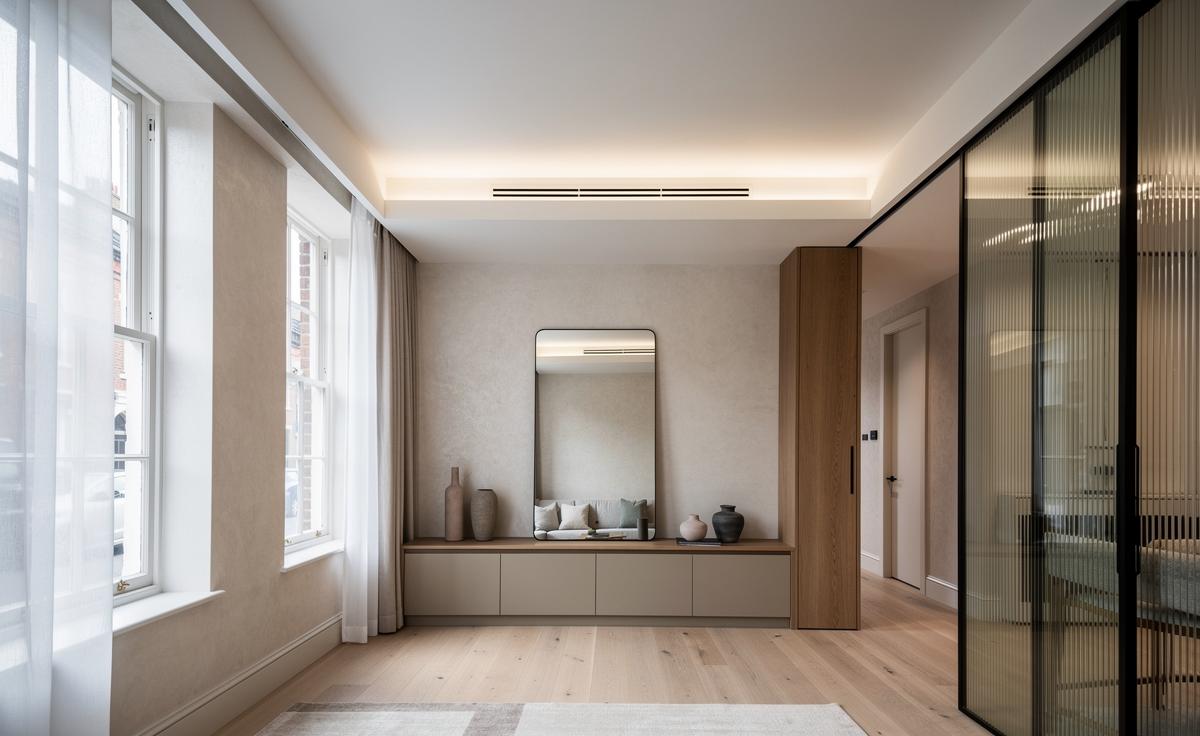
- Internal glazing: Borrow light across rooms with ribbed or reeded glass that guards privacy yet shares luminance.
- Light shelves: Shallow, pale ledges at head height flip daylight onto the ceiling plane, extending reach into the room.
- Mirrors—placed, not plastered: One large, non-opposite mirror can double perceived depth; avoid mirror mazes that ping-pong glare.
- Open top storage or gap to ceiling: Prevents “light dams” where tall cupboards block bounce.
The goal is to guide light, not hoard it at the window wall. A Manchester terrace I visited cut a slim interior window above a stair, borrowed light from a rooflight, and saw evening reading levels jump from 120 to 220 lux on cloudy days. The move cost less than a new casement but worked all year. Blend these with pale, low-profile radiators and simple pelmets to keep the ceiling line clean—because visual clutter absorbs perceived light as surely as a dark paint.
Why Bigger Windows Aren’t Always Better
It’s tempting to specify the largest glazing possible, but “more glass” can dull a room when it invites glare, heat loss, or overexposure to a gloomy view. Under an overcast sky, a vast, low window may feed grey light straight to eye level while leaving the ceiling starved—creating a cave effect. Strategic glazing that targets the brightest sky and then bounces it is usually brighter than sheer quantity.
Pros vs. cons to consider:
- Pros: Expansive views, solar gain on clear winter days, strong connection to garden rooms.
- Cons: Lower U-values if poorly specified, increased condensation risk, privacy issues forcing heavy blinds (killing daylight), and midday glare that leads occupants to pull curtains shut.
Smart mitigations include higher heads rather than wider sashes, external shading that trims glare without blackout, low‑iron glass for clarity, and selective coatings that keep interiors bright while moderating heat. A coastal bungalow in Pembrokeshire swapped one giant slider for two narrower units plus a clerestory strip; measured brightness improved at the room’s back wall, and the owners stopped living behind drawn voiles. The lesson is simple: design for distribution, then for drama.
On Britain’s cloudiest afternoons, bright-feeling homes are the ones that choreograph sky, surface, and section so that every ray goes further. Elevate window heads, favour high-LRV ceilings, and deploy reveals, shelves, and internal glazing to push daylight deeper. Remember that perceived brightness is a composition—of physics, finishes, and restraint—not a race for bigger glass. If you can light the ceiling, you can lift the room. Which single change—raising a head, limewashing a wall, or inserting a clerestory—would most transform the dullest corner of your home, and what would you try first?
Did you like it?4.4/5 (20)