In a nutshell
- 🔥 The hidden mistake: leaving leftovers to “cool” too long or chilling a deep pot keeps food in the 8–63°C danger zone, dulling flavour and boosting bacterial growth.
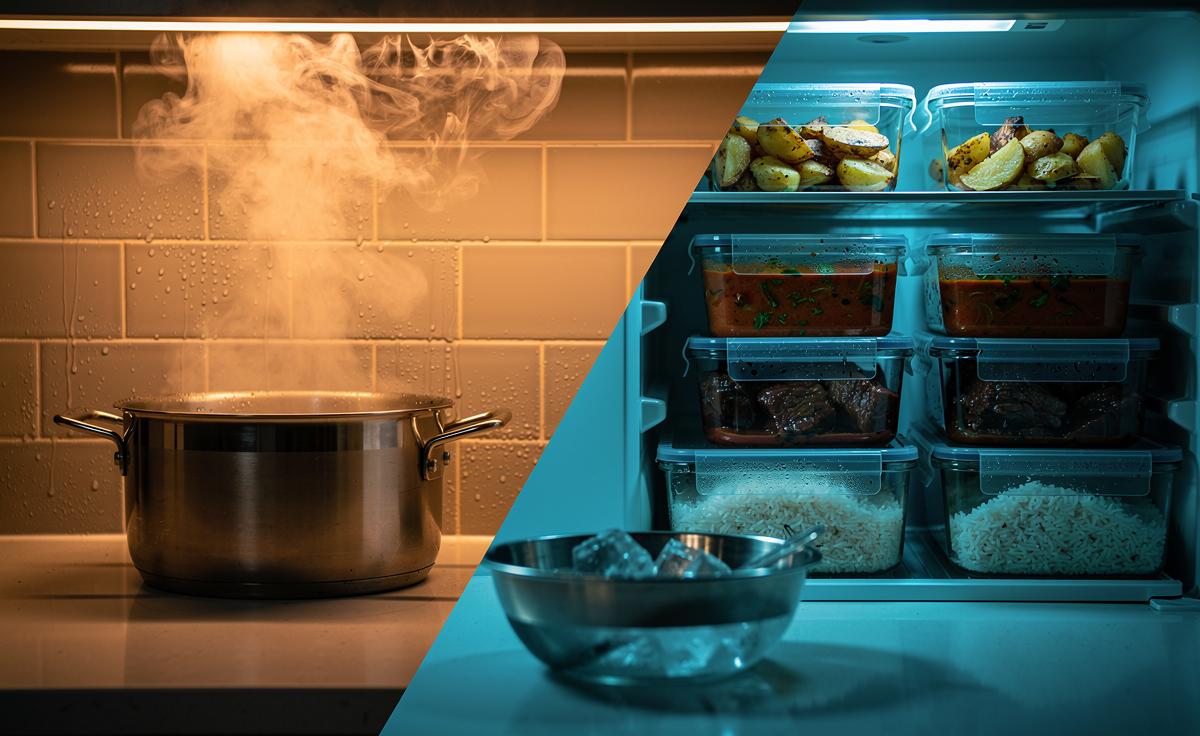
- 🧊 Do it right: cool and refrigerate within two hours in shallow containers (3–5 cm), lids slightly ajar then sealed; keep the fridge at or below 5°C.
- 🍚 High‑risk highlight: cooked rice can harbour Bacillus cereus; cool rapidly, refrigerate promptly, and eat within 1 day.
- 🍲 Protect quality and safety: rapid chilling preserves texture and aromatics; reheat once until the core hits ≥75°C and serve immediately.
- 📋 Practical wins: label and date portions, avoid stacking hot tubs, consider an ice bath for soups/stews, and choose shallow portions over deep‑pot storage every time.
Leftovers are the quiet workhorses of the British kitchen, stretching a Sunday roast to Tuesday, turning a curry into tomorrow’s lunch, and saving cash in a cost-of-living crunch. Yet many of us make a simple, well-intentioned mistake that sabotages both flavour and safety: leaving food out to “cool” for too long, or parking a deep, still-hot pot in the fridge where it won’t chill fast enough. The result? Limp veg, split sauces, and a bacterial free‑for‑all. As I’ve found when speaking to chefs and home cooks across the UK, the fix is straightforward but counterintuitive. The key is speed: cool quickly, store shallow, and reheat once—properly. Here’s how to stop that silent slip‑up from wrecking tomorrow’s meal.
The Leftover Mistake Hiding in Plain Sight
The common culprit is “benchtop limbo”: a casserole, curry, or traybake left out for hours to “let the steam off.” That lingering period sits squarely in the microbial danger zone of roughly 8–63°C, where bacteria can multiply briskly. There’s a taste tax, too. Steam trapped in a deep pot condenses and drips back, dulling seasoning, softening crisp edges, and muddying aromatics. Fat rises and blankets the surface, so tomorrow’s reheat tastes flat and greasy. In short, this isn’t just about food poisoning statistics; it’s about preserving texture, aroma, and the snap and gloss you worked for when the dish was fresh.
UK guidance echoes a simple discipline: cool and refrigerate within two hours. The Food Standards Agency advises chilling leftovers as quickly as possible and reheating thoroughly until steaming hot (aim for a 75°C core). Some foods, like cooked rice, carry special risks from Bacillus cereus, which survives cooking and thrives as grains linger warm. During a home‑kitchen shadowing in Leeds, I watched a rich beef casserole left steaming in its stockpot for three hours; by morning, the sauce had thinned, the top layer tasted oxidised, and the family binned half the batch “because it smelled a bit off.” That waste—and wobble in quality—was avoidable.
Why “Let It Cool First” Isn’t Always Better
We’ve all heard it: “Never put hot food straight in the fridge.” The worry is twofold—overworking the appliance and warming nearby items. Here’s the nuance: it’s risky to refrigerate a single large, hot mass in a deep pot. But it’s safe—and smarter—to portion while warm into shallow containers (about 3–5 cm deep), leave lids slightly ajar, and refrigerate promptly. Modern fridges recover temperature quickly; what they can’t fix is hours of slow cooling on the counter. Meanwhile, flavour chemistry doesn’t stand still: volatile aromas disperse, steam sogs crisp coatings, and once‑vibrant greens go khaki.
Consider the trade‑offs below. The goal isn’t tepid food on the worktop; it’s rapid heat loss and controlled chill. Think of it as a flavour bank: rapid cooling “locks in” herbs, acidity, and roasted notes, so next‑day meals taste bright rather than stewy and flat. For safety, you’re cutting down the time microbes can multiply. For quality, you’re protecting texture and balance. That’s a win‑win for Monday’s lunchbox and your energy bill.
- Bench-Cooling, Uncovered (Long): Pros—reduces condensation. Cons—prolongs time in the danger zone, invites contamination, bleaches flavour.
- Fridge, Deep Pot: Pros—feels convenient. Cons—core cools slowly; edges may sour while centre stays warm; taste suffers.
- Fridge, Shallow Portions (Best): Pros—fast chill, safer, preserves texture and aromatics. Cons—needs containers and shelf space.
- Ice Bath Assist (Soups/Stews): Pros—fastest safe cool; excellent taste retention. Cons—extra step and washing‑up.
A Practical, UK-Proof Method to Save Taste and Time
Here’s a routine that home cooks and café kitchens swear by. Decant hot food straight into shallow trays or tubs (3–5 cm deep). For liquids, set the pot in a clean ice bath and stir to drop the temperature rapidly before portioning. Leave lids slightly ajar for 20–30 minutes to let steam escape, then seal and refrigerate—ideally within two hours of cooking. Don’t stack hot containers; space them so cold air can circulate. Label with what and when. Shallow, swift, single‑reheat is the mantra: reheat once only until piping hot, and serve immediately. Most fridges should sit at or below 5°C; check with a cheap thermometer.
For taste, this method preserves acid brightness in tomato sauces, keeps roast potatoes from turning leathery, and stops curries from stratifying into grease and gravy. For safety, it curbs the bacteria that love a long warm spell. Rice deserves special mention: cool it quickly, refrigerate promptly, and aim to eat within a day. Trust your senses, but not alone—smell can mislead. The table below distils the key targets many UK food professionals follow to defend flavour and safety without faff.
| Action | Target/Timing | Why It Matters |
|---|---|---|
| Cool and refrigerate | Within 2 hours | Limits time in the 8–63°C danger zone |
| Container depth | ≤ 5 cm | Faster heat loss, better texture retention |
| Fridge temperature | At or below 5°C | Slows microbial growth significantly |
| Rice (cooked) | Eat within 1 day | Reduces risk from Bacillus cereus |
| Most stews/curries | Use within 2–3 days | Quality and safety sweet spot |
| Reheating | Once only, to ≥ 75°C | Uniformly hot and safe, protects taste |
Leftovers should be a midweek gift, not a gamble. The hidden error—letting food loiter warm or cool too slowly—quietly erodes flavour while inviting trouble. Switch to shallow containers, speedy chilling, and a single, thorough reheat and you’ll taste the difference in brighter spices, truer veg, and silky sauces that don’t split. You’ll also waste less, spend less, and dodge the stomach‑bug roulette that too often follows a casual “it’ll be fine.” What one tweak—container depth, timer on the hob, or fridge thermometer—will you adopt tonight to make tomorrow’s leftovers safer and more delicious?
Did you like it?4.5/5 (27)